AgroParisTech takes over the EBU presidency
AgroParisTech took over the presidency of the European Bioeconomy University (EBU) on 4 November for a two-year term, until November 2028, with Laurent Buisson, Dean and Executive Director of AgroParisTech, serving as Chair.
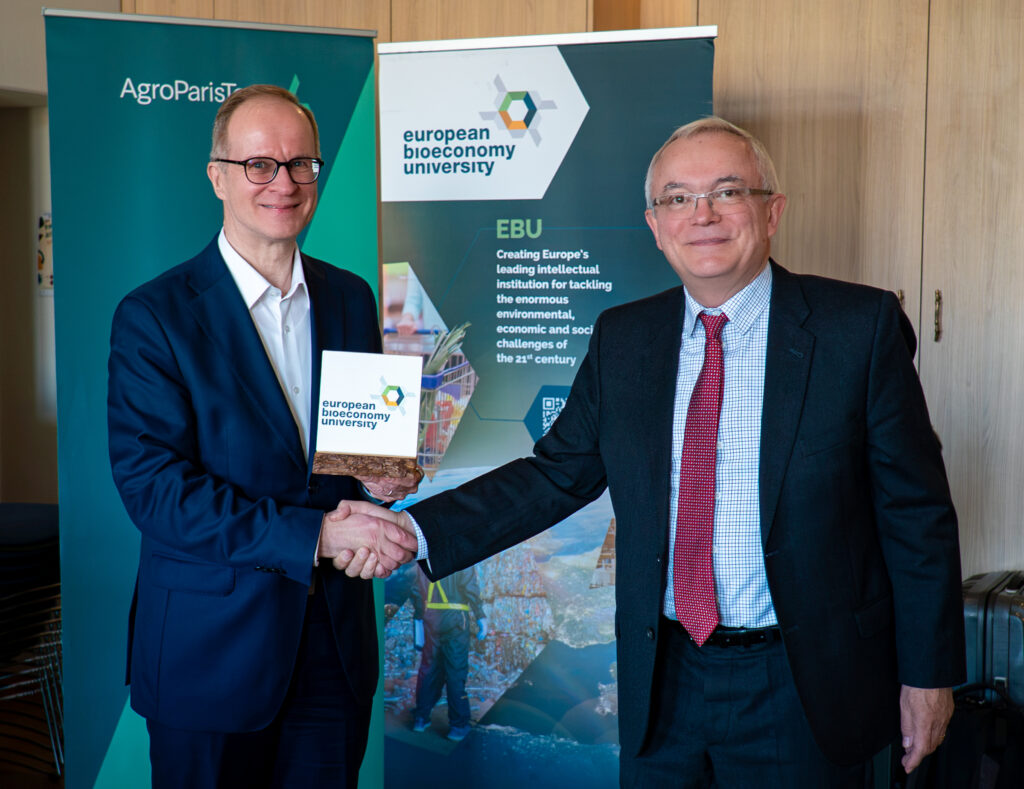
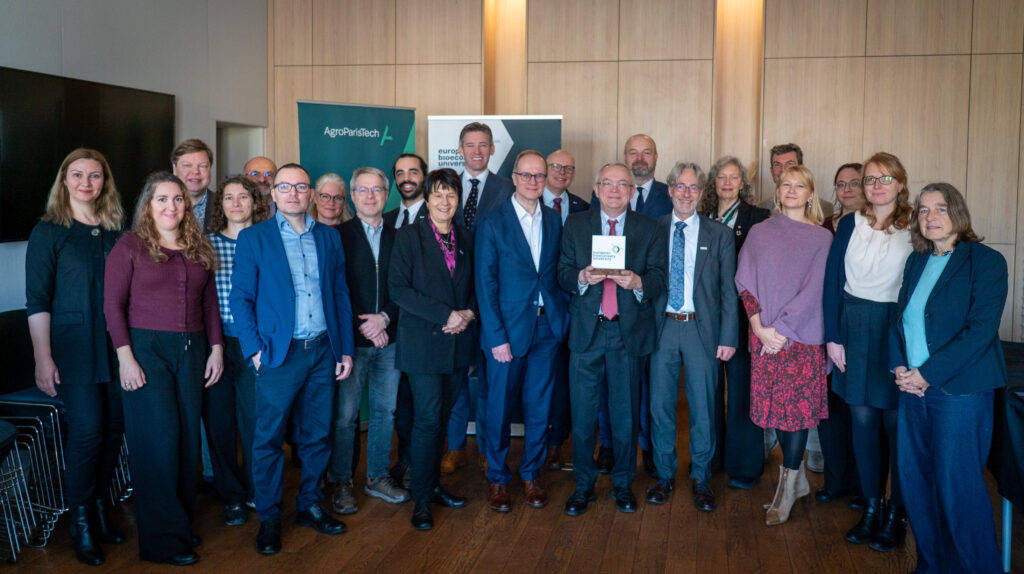
The handover took place in Paris at the Maison des Ingénieurs de l’Agro, in the presence of Tapio Määttä, Rector of the University of Eastern Finland (UEF) and outgoing Chair, and of the rectors, presidents and deans of all EBU member universities, as well as Coordination Group members. Together, they reviewed the achievements of the UEF presidency and validated the programme for AgroParisTech’s term. They also addressed key topics for the Alliance, including its strategic collaboration policy and future projects. A key moment of the day was the symbolic handover of the EBU Chair, marked by the transfer of the EBU symbol from Tapio Määttä to Laurent Buisson.
It comes on the heels of the European Union’s new bioeconomy strategy, published in November 2025 and which mentions explicitly EBU, at a time when discussions on the next EU multiannual financial framework are still under way.
2028–2034 EU budget: what resources for the bioeconomy and research?
The upcoming budget decisions will shape the resources devoted to research, innovation and education. They will notably cover the future European research and innovation framework programme (FP10), the European Competitiveness Fund and the next Erasmus+ programme. For EBU, the challenge is to make universities’ contribution to the implementation of the European bioeconomy strategy heard, from agricultural and forestry production and the processing of biological resources to applications in food, materials and biotechnology.
“These decisions will determine what Europe can invest in the bioeconomy, in research as well as in skills. But the transition cannot happen without trained people to drive it: universities therefore have a rightful place in this debate, with solid, shared proposals,” says Laurent Buisson, Dean and Executive Director of AgroParisTech and Chair of EBU.
Five priorities for the 2026–2028 presidency
- Impacting the European Bioeconomy landscape through lobbying and intellectual contributions,
- Connecting the ecosystems of the EBU members to foster innovation,
- Deepening the Bioeconomy collaboration through an ambitious EU-funded projects strategy,
- Pursuing global cooperation towards broader approaches to the Bioeconomy,
- Upgrading the EBU’s communication and visibility strategy.
EBU will draw in particular on the projects, networks and partnerships to which its members contribute, including but not limited to DESTINY, a Marie Skłodowska-Curie doctoral network coordinated by AgroParisTech; BIOSPARK, supported by the European partnership Circular Bio-based Europe Joint Undertaking (CBE JU); and the Global Bioeconomy Partnership. The alliance also intends to continue its intellectual work, notably its publications on the circular bioeconomy in Europe (2025) and on the role of higher education in the bioeconomy (2026), as well as its active participation in European and international events such as the Global Bioeconomy Summit.
EBU’s biannual scientific forum dedicated to the bioeconomy, the European Bioeconomy Scientific Forum (EBSF), will also take place from 27th to 29th October, at the AgroParisTech campus in Palaiseau.
“In its seven years of existence, the EBU alliance has trained more than 300 students, developed a joint education programme specific to the bioeconomy, with a focus on entrepreneurship and the sustainability of the solutions put forward, and built multidisciplinary scientific collaborations among its eight founding members. By drawing on their complementary strengths and recognised expertise, it has become a breeding ground for new ideas and opportunities to advance the bioeconomy and contribute to the ecological and social transition,” adds Benoit Gabrielle, Professor of Sustainability Science and Bioeconomy at AgroParisTech and Speaker of EBU for the next two years.
“A university alliance is worth what it concretely brings to public decision-making: analysis, projects that deliver results, and young people trained. We want EBU to continue to be recognised in Brussels as a leading scientific partner, and for this expertise to carry well beyond Europe,” concludes Laurent Buisson.